The black Terrier, with its deep, glossy coat, has long fascinated me and kept me studying. Although sceptics until recently wrongly labelled this wonderful colour variant a mixed breed, modern cynology and genetics prove it is a genuine part of the breed's heritage. At my kennel, Little Shining Angels, I am the only breeder in Slovenia breeding black Terriers under the Kennel Club of Slovenia (KZS), and one of the few in Europe committed to strict pure-line breeding.
From a natural mutation to the show ring
The history of the classic Terrier is closely tied to preserving the steel-blue and gold colour. Over the decades, however, solid black puppies occasionally appeared in litters as entirely natural genetic mutations. In the past, breeders systematically removed these naturally occurring black dogs because they did not fit the beauty standards of the time, even though they were genetically pure representatives of the breed.
Today the understanding of genetics is developing fast. My black Terriers are officially bred and shown under the KZS, with official pedigrees, which allows participation in official shows.
The genetics of black colour
Coat colour is determined by two basic pigments: eumelanin (black or brown) and phaeomelanin (red or yellow). In the classic Terrier, a greying gene lightens the colour with age into steel blue and gold. In the black Terrier, we want to keep an even, deep black without lightening.
The key role is played by the K locus, the gene for dominant black (CBD103). In 2007, in the respected journal Science, scientists discovered that a mutation in this gene produces even black colour: it prevents the expression of the agouti gene, so the coat produces only dark pigment. In deliberate breeding of black Terriers I also aim for the absence of greying, so the adult dog keeps its rich black colour for life.
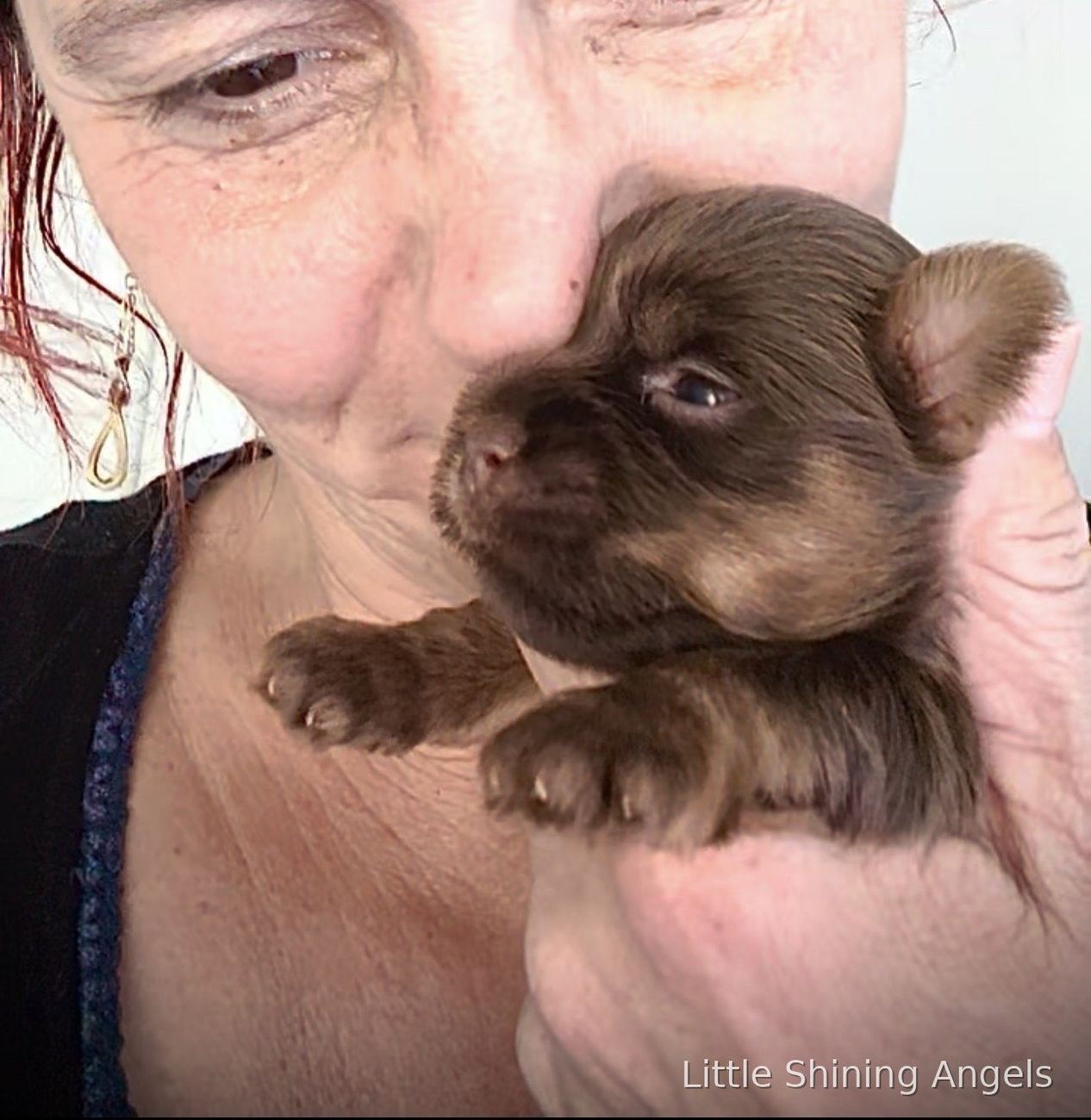
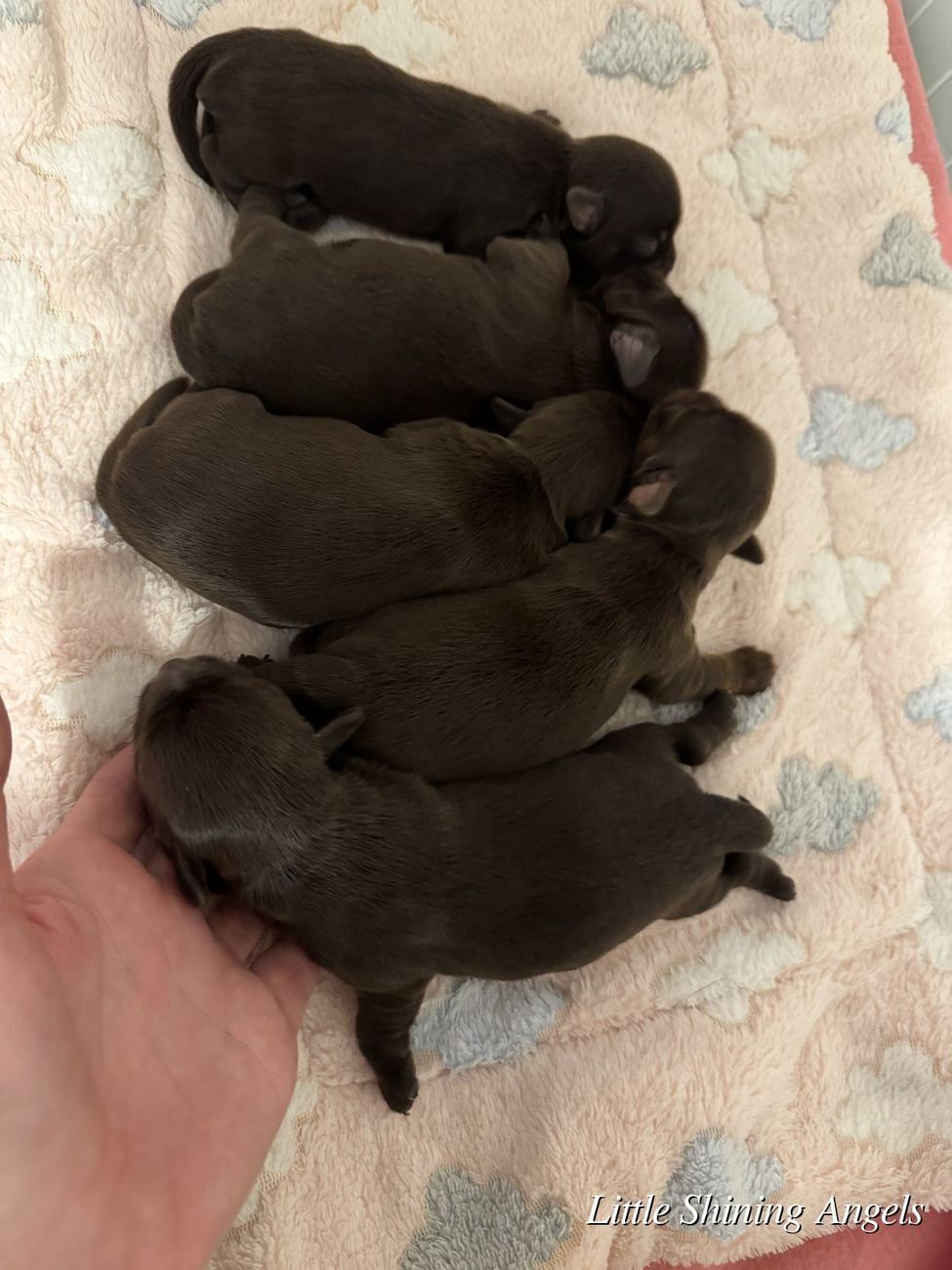
The difference between the black and chocolate Terrier (chocolate yorkie) is also genetic. It is determined by the B locus, which controls the form of the dark pigment. The black Terrier carries the dominant allele for black, while the chocolate Terrier inherits two copies of the recessive allele, turning the black pigment into warm chocolate brown, with lighter eyes and a brown nose.
Appearance of the black Terrier
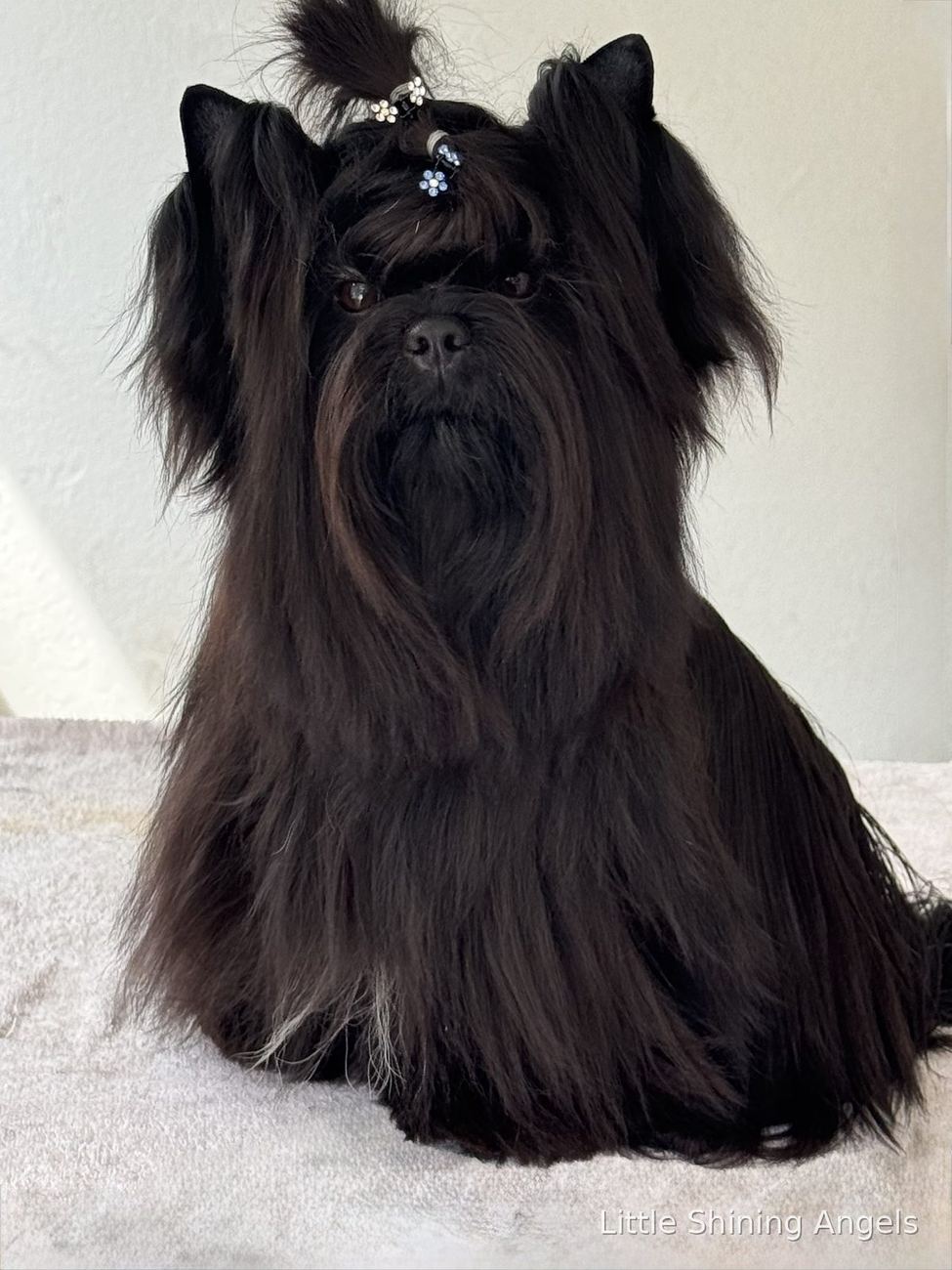
Fully black dogs are the most desirable. Genetically, small white markings (for example on the chest) or brown markings on the paws are permitted, a normal occurrence in dogs carrying recessive genes for other colours. The eyes should be markedly dark, giving the dog a bright expression, and the coat should be long, straight and silky.
Character: a terrier with a big heart
The black Terrier is a true terrier in character: bright, confident, loyal and trainable. They are loving companions who bond strongly with their family. Their high intelligence means they need play, yet they are adaptable and gentle. In my breeding I pay special attention to a calm, stable temperament.
My breeding vision
As the only breeder of black Terriers within the official KZS system in Slovenia, I am aware of the responsibility of working with such a rare colour variant. I actively import top sires from abroad to keep a diverse and healthy gene pool and to prevent close inbreeding. All my dogs undergo extensive health and genetic tests before entering breeding, because beauty without health means nothing.
Literature and sources
Candille, S. I., Kaelin, C. B., Cattanach, B. M. et al. (2007). A β-defensin mutation causes black coat color in domestic dogs. Science, 318(5855), 1418–1423.
Schmutz, S. M., & Berryere, T. G. (2007). Genes affecting coat colour and pattern in domestic dogs: a review. Animal Genetics, 38(6), 539–549.
Sponenberg, D. P., & Rothschild, M. F. (2001). Genetics of Coat Colour and Hair Texture in Dogs. In: The Genetics of the Dog. CABI Publishing.
Guidelines of the UC Davis Veterinary Genetics Laboratory and Embark for testing colour loci in the Terrier.
This text is based on current professional knowledge and on our kennel's experience. It does not replace consultation with a veterinarian or cynologist.