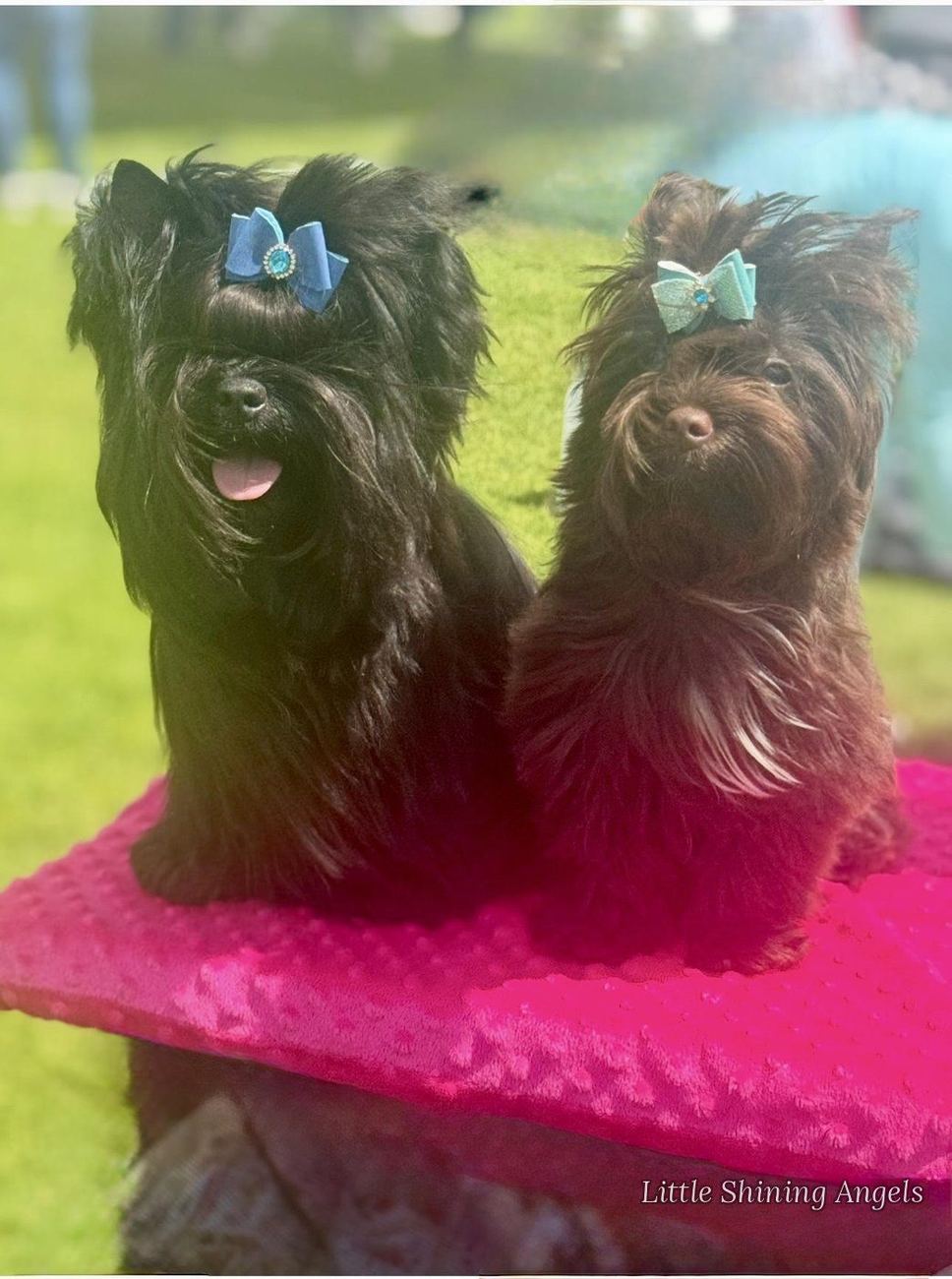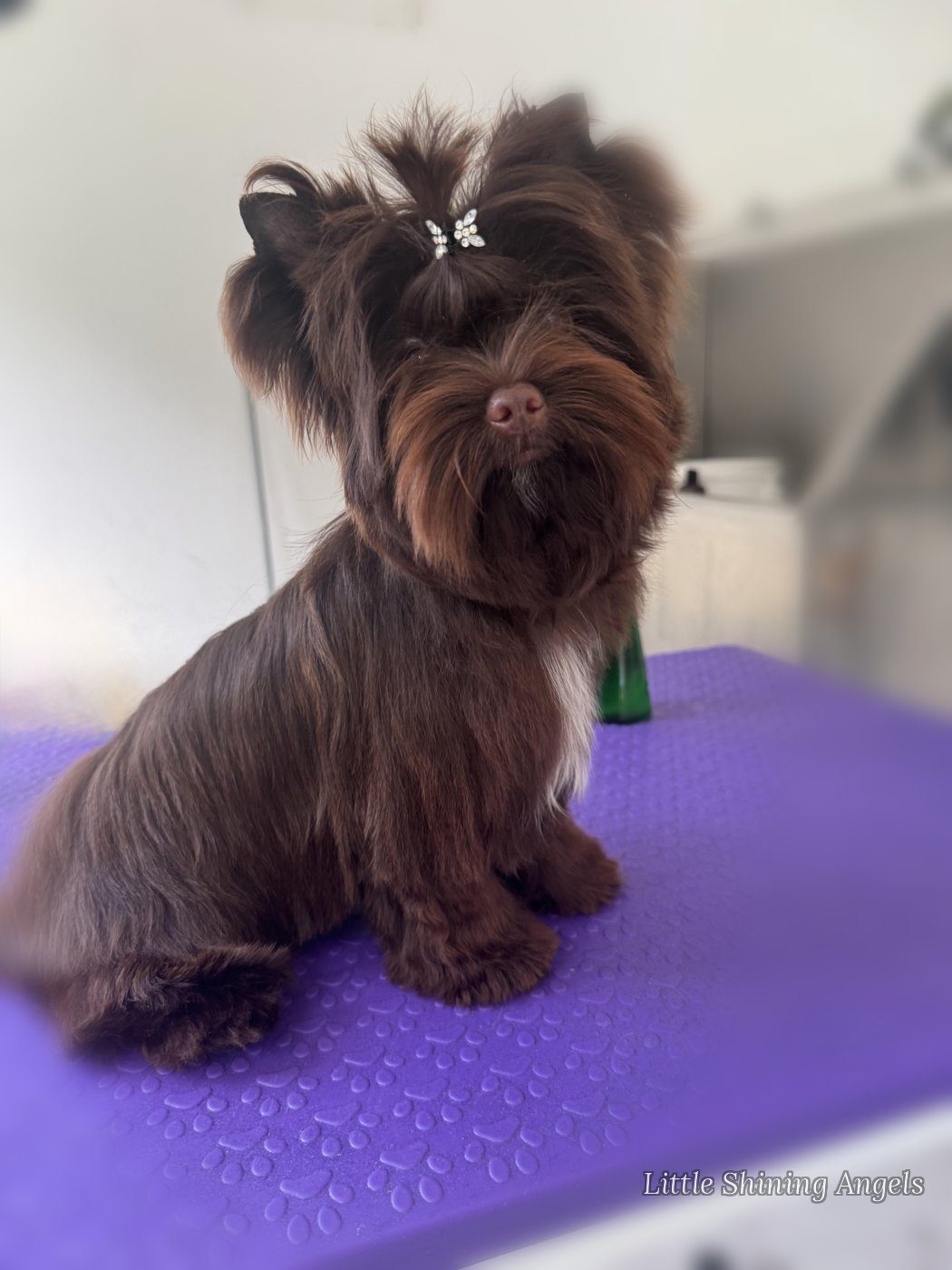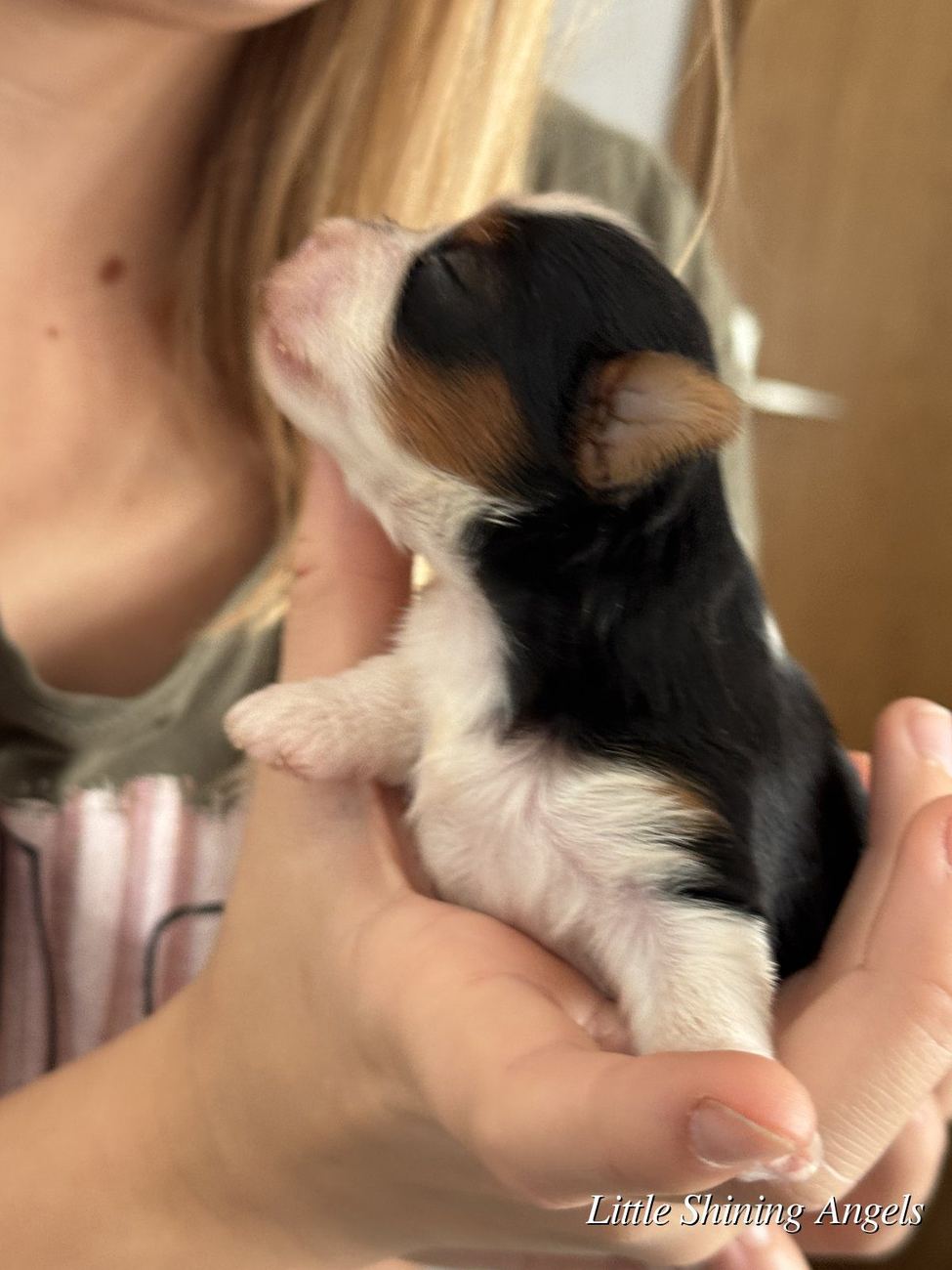
All the dog breeds we know today came about in the same way. Humans chose the dogs that had the trait they wanted and bred them on. We call this selective breeding. It is a tool that created a wonderful diversity of breeds, but it is at the same time a tool that can do great harm.
How selective breeding works
The essence is simple. If we choose dogs with a certain trait and breed them together, that trait strengthens in the offspring. Through the generations it becomes more pronounced and passes on more reliably.
This is how all the characteristics we value in breeds arose. Body shape, coat type, character and, of course, colour.
How colour variants arise
Colour variants generally do not arise from nothing. Genes for colour are often present in a breed for a long time, only hidden. Technically we call them recessive genes.
A hidden gene shows only when both parents pass it on. So it can happen that in the litter of two seemingly ordinary dogs a puppy of a completely different colour appears. It did not come from nowhere. It was hidden all along.
When a breeder notices such a dog and deliberately breeds it with a dog carrying the same gene, the colour strengthens. This is how a new colour line arises.
Where the line of responsible breeding lies
And here comes what is most important. Selective breeding can be a blessing or a curse, depending on what we choose.
When we choose health, a stable character and good build, we strengthen the breed. But when we choose only looks, and at any cost, we can destroy it.
The history of cynology is full of sad examples where the excessive emphasis on a single trait led to dogs that struggle to breathe, struggle to walk or have chronic diseases. All because appearance mattered more than health.
The danger of too narrow a gene pool
Another trap lurks for breeders of rare lines. Because there are few dogs with this trait, there is a temptation to keep mating the same related dogs. This narrows the gene pool.
The consequences of a narrow gene pool are known. Poorer resistance, more hereditary diseases, poorer fertility. That is precisely why, with rare lines, it is even more important for a breeder to seek sires far and wide, including abroad.
It is precisely for this reason that we source our sires in different countries. Not because it is easier or cheaper, but because only this way is a diverse and healthy gene pool preserved.
At the same time, we never choose dogs by colour alone. The first criterion is always health, the second character, and only then comes appearance. A beautiful colour on a sick dog is worth nothing.
Selective breeding is a tool. Like any tool, it can be used well or badly. It is the breeder's responsibility to use it thoughtfully and for the benefit of the dogs, not for the benefit of fashion.
Literature and sources
Parker HG, Dreger DL, Rimbault M et al. (2017). Genomic analyses reveal the influence of geographic origin, migration and hybridization on modern dog breed development. Cell Reports 19(4):697–708.
Asher L, Diesel G, Summers JF, McGreevy PD, Collins LM (2009). Inherited defects in pedigree dogs. Part 1: Disorders related to breed standards. The Veterinary Journal 182(3):402–411.
Leroy G (2011). Genetic diversity, inbreeding and breeding practices in dogs: results from pedigree analyses. The Veterinary Journal 189(2):177–182.