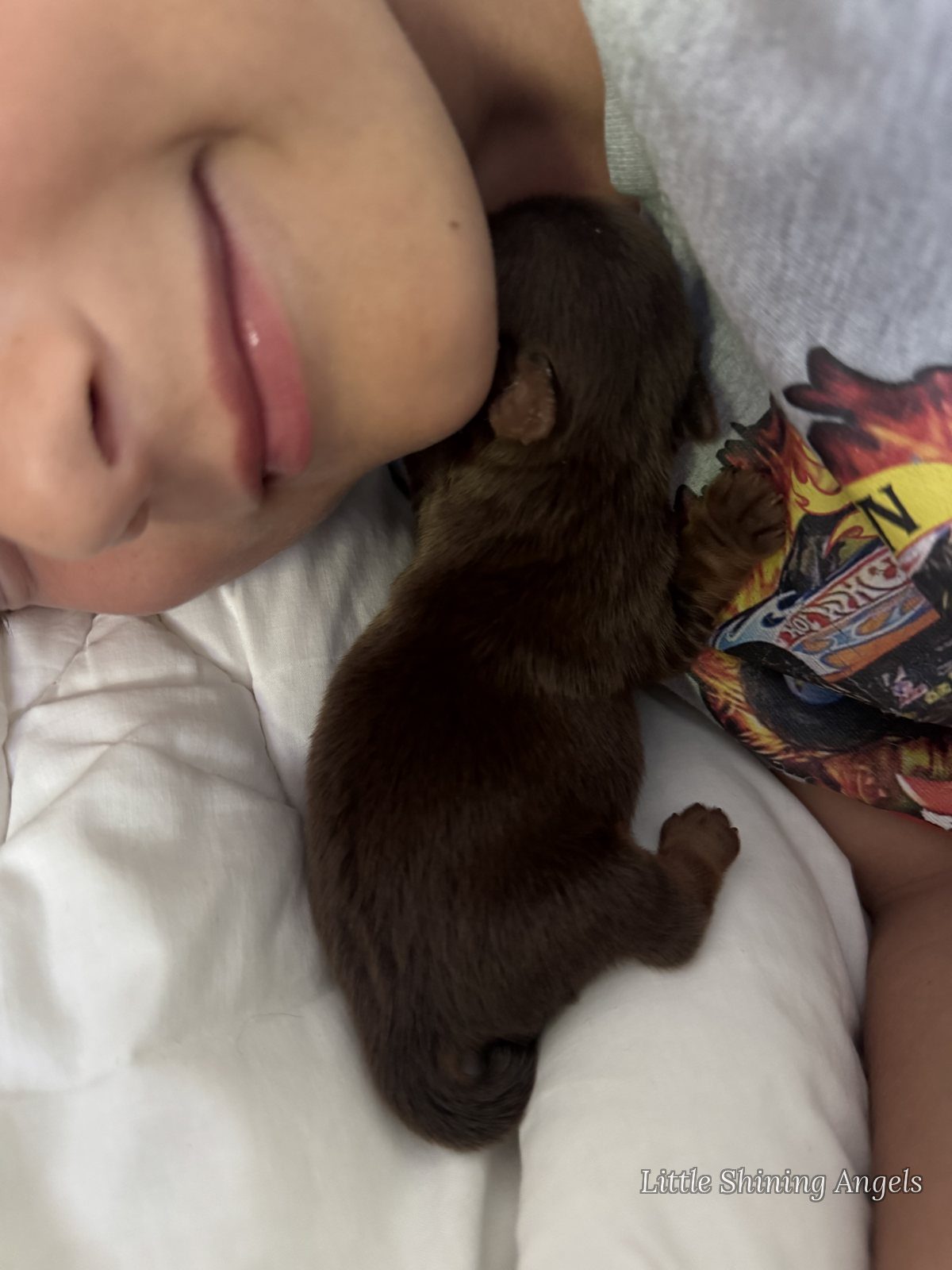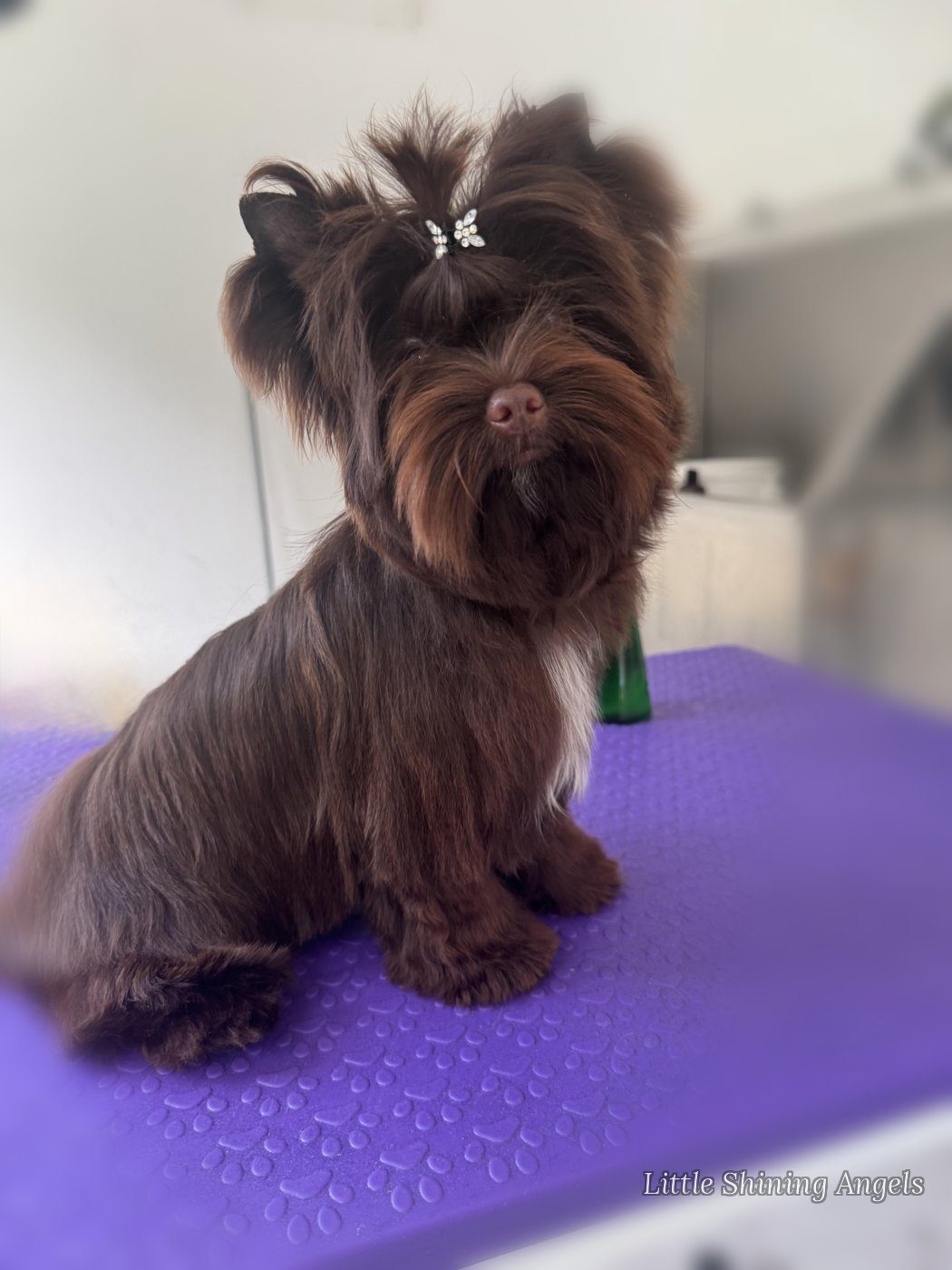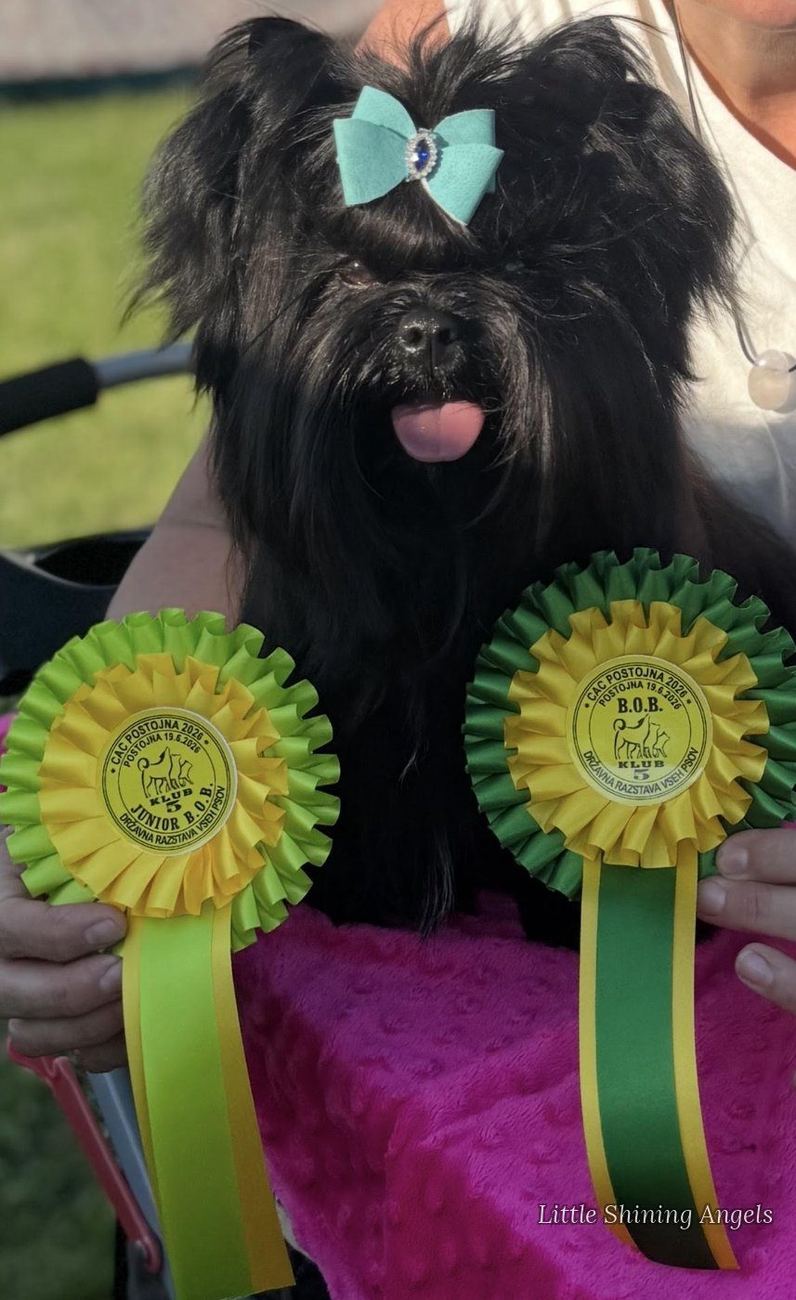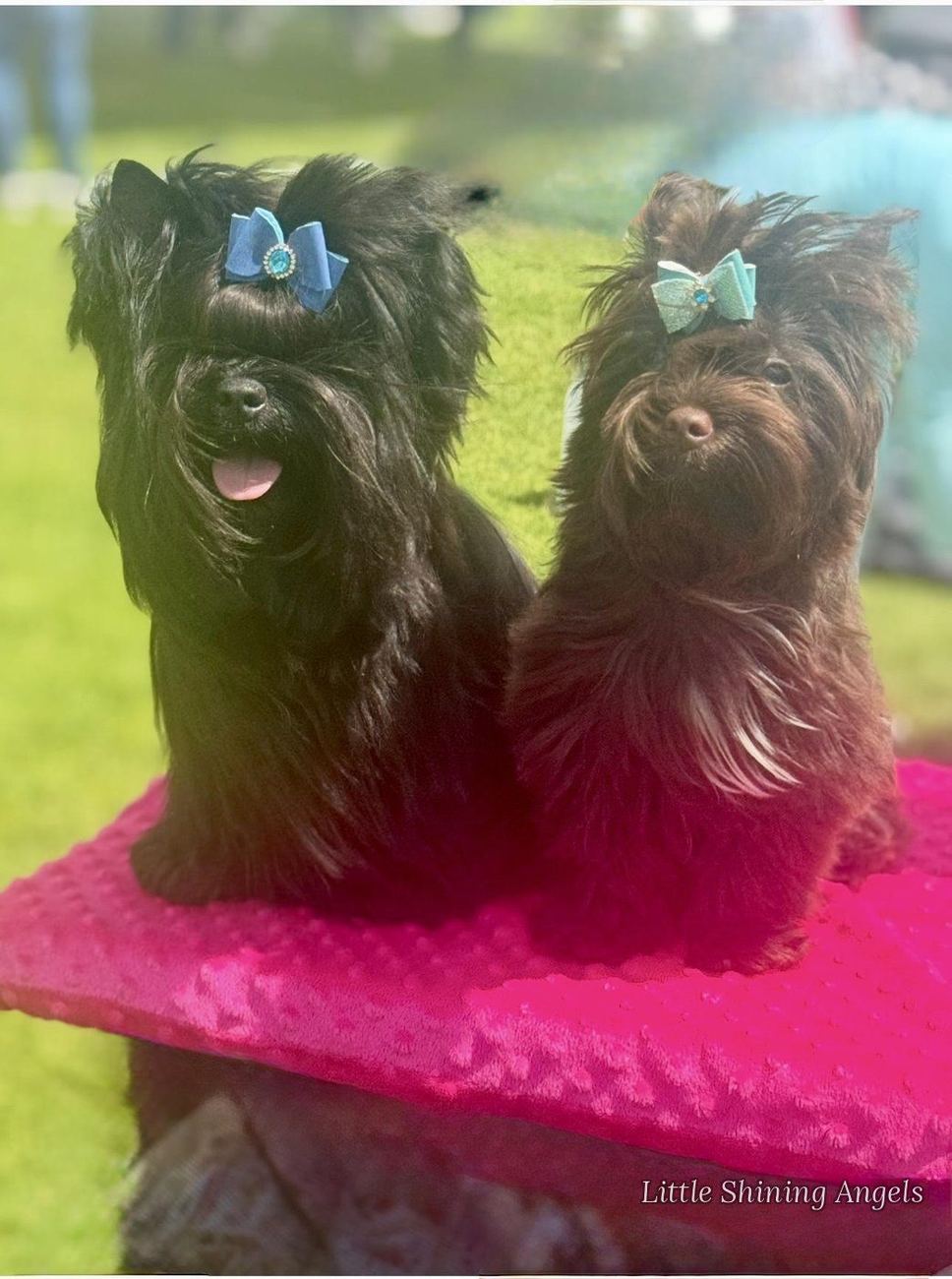
Many people think the Terrier exists only in the classic steel-blue colour with gold markings. But history and genetics tell a more colourful story. Chocolate and black Terriers are not an accident, but the result of genes present in the breed from the very beginning.
How the colour variants really arose
Among the ancestors of these little terriers were ancient dogs such as the Clydesdale Terrier, the Paisley Terrier and the Waterside Terrier. These were not uniform in colour; they carried diverse genetic codes for coat colour. As the lines crossed, some genes became recessive, that is, hidden. Through the generations they remained concealed until two seemingly standard parents met, both carrying the same recessive gene. The result was a puppy of a special colour, chocolate or fully black.
There are also theories of a spontaneous genetic mutation in English lines at the end of the 19th century, and of the occasional introduction of other lines to improve the coat. All have one thing in common: the colour genes have been present in this group of dogs for more than a century.
Historical records by the respected cynologist Rawdon B. Lee from 1893 already testify that the ancestors of these little terriers carried an exceptionally varied genetic code for coat colour, from which today's pure line of black Terriers originates.
The science behind the beauty: what determines colour
Coat colour is determined by two basic pigments: eumelanin, which is black, and phaeomelanin, which is red or yellow. The distribution and expression of these two pigments create all the colours we see.
In the chocolate Terrier (chocolate yorkie), this involves the so-called B locus. A chocolate Terrier must have two recessive alleles for brown, genotype bb. This code lightens the black pigment into rich chocolate shades. That is why the chocolate Terrier also has a chocolate-brown nose, brown pads and often beautiful amber or light-brown eyes. As the leading canine geneticist Dr Sheila M. Schmutz demonstrates in her research, the chocolate colour is the result of a homozygous state of recessive alleles at the B locus — a natural genetic modification of pigment, not a mixing of breeds.
In the black Terrier (black yorkie), the point is that it stays deep black for life, unlike the classic ones that grey into steel blue with age. In it the black pigment is maximally expressed; the nose, eyelid rims and pads are densely black, and the eyes dark brown to almost black.
Literature and sources
Schmutz, S. M., research on the genetics of dog coat colour (B locus, eumelanin and phaeomelanin).
Lee, Rawdon B. (1893). A History and Description of the Modern Dogs of Great Britain and Ireland.
This text is based on current professional knowledge and on our kennel's experience. It does not replace consultation with a veterinarian or cynologist.