Almost everyone believes the same rule. If a dog wags its tail, it is happy and friendly. This belief is so widespread that hardly anyone questions it. But the truth is more interesting, and more important, than we think.
The tail is not a switch for happiness. The tail is a language. And just as in speech it matters how something is said, not only that it is said, with the tail too it matters how the dog wags, not just that it wags.
The tail says a dog is aroused, not necessarily happy
Wagging actually means the dog is emotionally aroused and ready for contact. But arousal can be pleasant or unpleasant. A dog that can't wait to greet you wags. But a dog that is tense, insecure or preparing to defend itself can also wag.
This is exactly why unpleasant surprises happen. A child approaches a wagging dog and pets it, thinking it is happy. But the dog was actually tense. Many a bite happens precisely because of this misreading.
How to read the tail correctly
Three things matter when reading the tail.
The height of the tail. A tail raised high and stiff means tension, confidence or readiness. A tail in a relaxed, middle position means a calm dog. A tail pushed low or between the legs means insecurity or fear.
The speed and breadth of the wag. A broad, relaxed wag in which the whole rear sways is a sign of real joy. A fast, small quiver of a tail held high, however, is often a sign of tension, not joy.
The whole body. This is most important. We always read the tail together with the ears, body posture, eye expression and facial muscles. A relaxed dog has a soft body, slightly open mouth and calm eyes. A tense dog is stiff, with a focused gaze, even if it wags.
A fact discovered by science
Research has shown something surprising. The direction a dog wags more is not random. When a dog sees something pleasant, for example its person, it wags more to the right. When it sees something that unsettles or frightens it, more to the left. This is linked to how the canine brain processes emotions.
This difference is small and almost imperceptible to the naked eye, but it tells us something important. The tail really is a window into a dog's emotions; we just have to know how to look.
What this means with our dogs
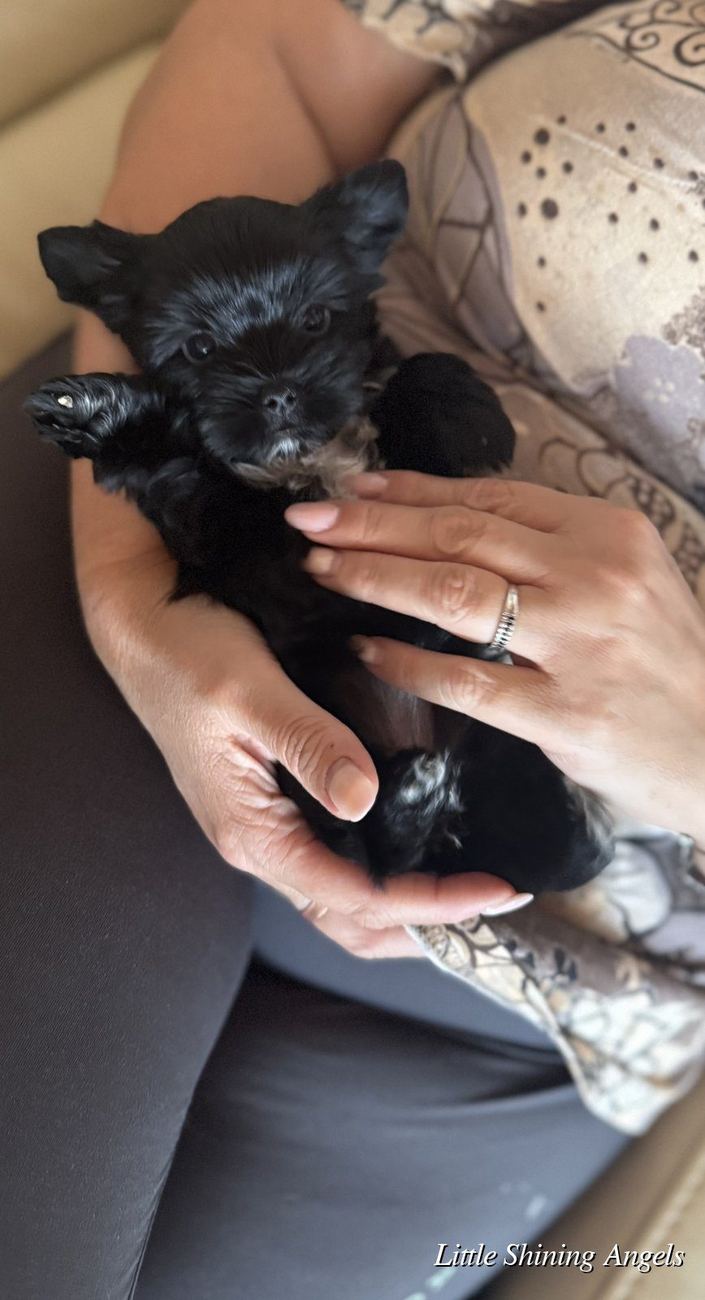
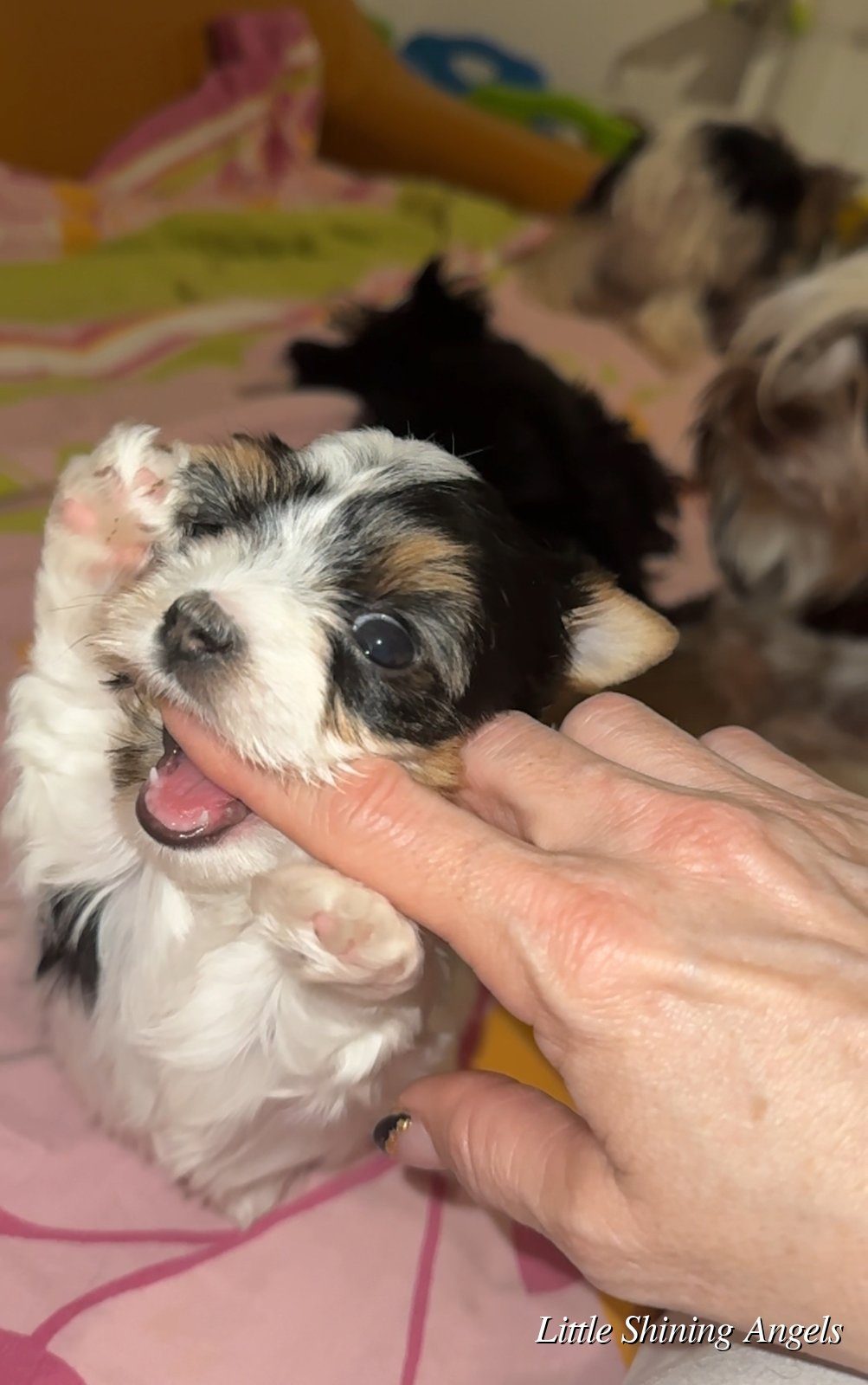
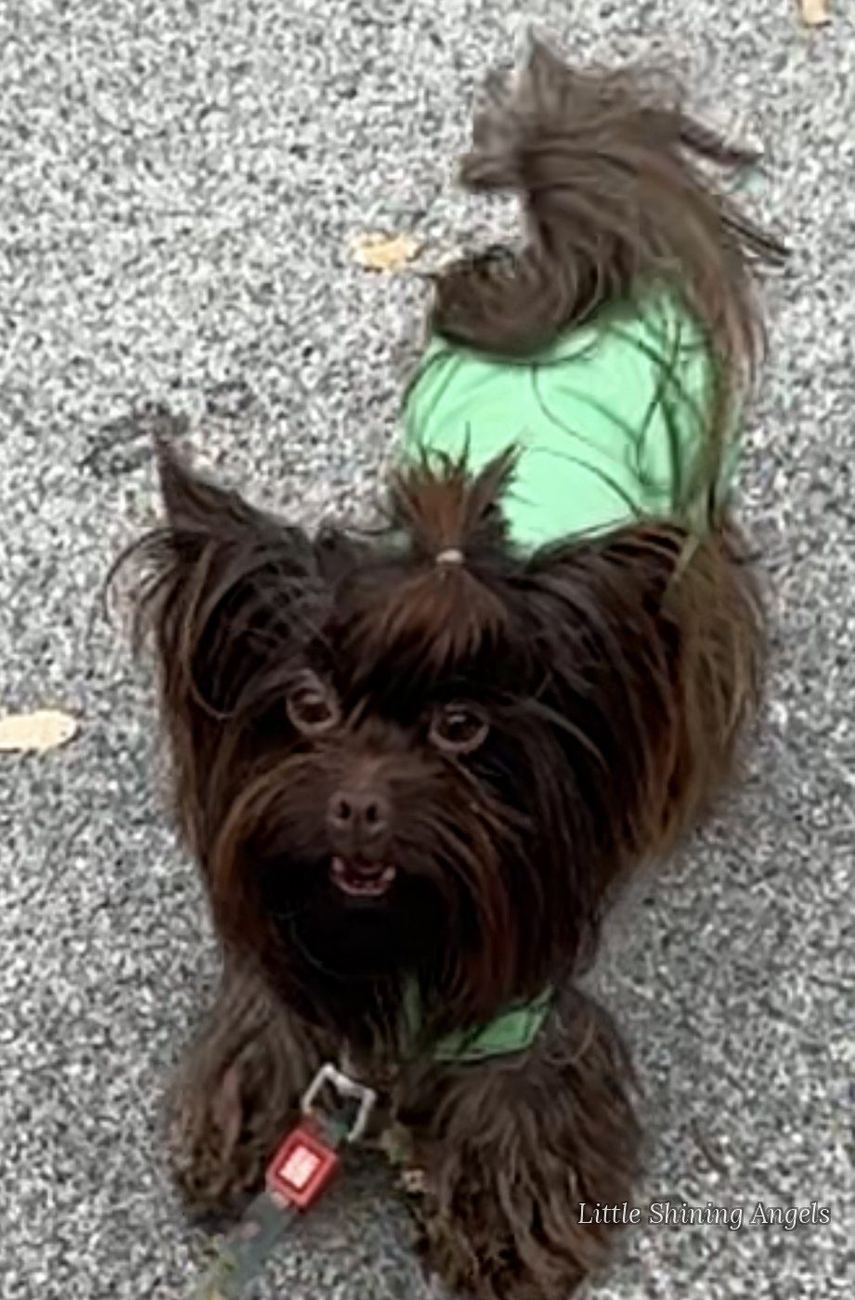
With small breeds like chocolate Terriers, black Terriers and Biewer Terriers, reading the tail is especially interesting. Because they are small, people often pick them up or pet them without a second thought, thinking "it's wagging, so it's happy". But even a small dog has its limits, and even a small dog can use its tail to say something is too much.
So with our puppies we observe the whole body language from the first day, not just the tail. This way we learn when a dog is truly enjoying itself and when it would rather have peace. This is also one of the reasons our dogs grow up in a calm, kind environment where their limits are respected.
What to remember
A wagging tail is not a promise that a dog is friendly. It is a sign that it feels something. Before approaching a dog, look at the whole body, not just the tail. And teach children exactly this, as it can protect them from an unpleasant experience.
Whoever learns to read a dog as a whole gains a far deeper relationship with it. A dog is talking all the time. We just have to know how to listen.
References and sources
Quaranta A, Siniscalchi M, Vallortigara G (2007). Asymmetric tail-wagging responses by dogs to different emotive stimuli. Current Biology 17(6):R199–R201.
Siniscalchi M, Lusito R, Vallortigara G, Quaranta A (2013). Seeing left- or right-asymmetric tail wagging produces different emotional responses in dogs. Current Biology 23(22):2279–2282.
Handelman B (2012). Canine Behavior: A Photo Illustrated Handbook. Dogwise Publishing.