Sometimes I wonder what has to happen inside a person for them to leave a living being at a shelter's door or, worse, in a bag by the roadside. As a breeder I live every day with the responsibility that caring for living souls brings, and when I hear of such stories, I feel not only anger. Above all I feel deep sadness.
Irresponsibility towards animals rarely happens overnight. Most often it is the result of a series of small wrong decisions that accumulate over time until a person reaches the point where they can no longer cope.
How distress arises
Many who end up with too many animals are not evil. They are simply someone who did not think in time. They did not plan, did not foresee, did not take responsibility until it was too late. Uncontrolled mating, one unexpected litter after another, and suddenly the situation got out of hand.
That is precisely why I believe responsibility begins far earlier than most think. Not when the dog is already here, but when we are deciding at all whether we are ready for it.
The question of spaying and neutering
Spaying and neutering must be spoken of openly and without exaggeration in either direction. For me this procedure is not something self-evident to be done to every dog. Every procedure has its consequences and its cost to the dog's body.
But it becomes a responsible and sensible decision in two cases. First, when an owner realises they cannot reliably prevent uncontrolled mating. And second, when a dog suffers so clearly from hormones that the procedure actually brings it relief and a better life. In such cases it is not only permitted but right.
The way forward
I believe the solution begins not with condemnation but with awareness. With people understanding a dog's emotional world before they take it home. With taking upbringing and responsibility seriously from the first day.
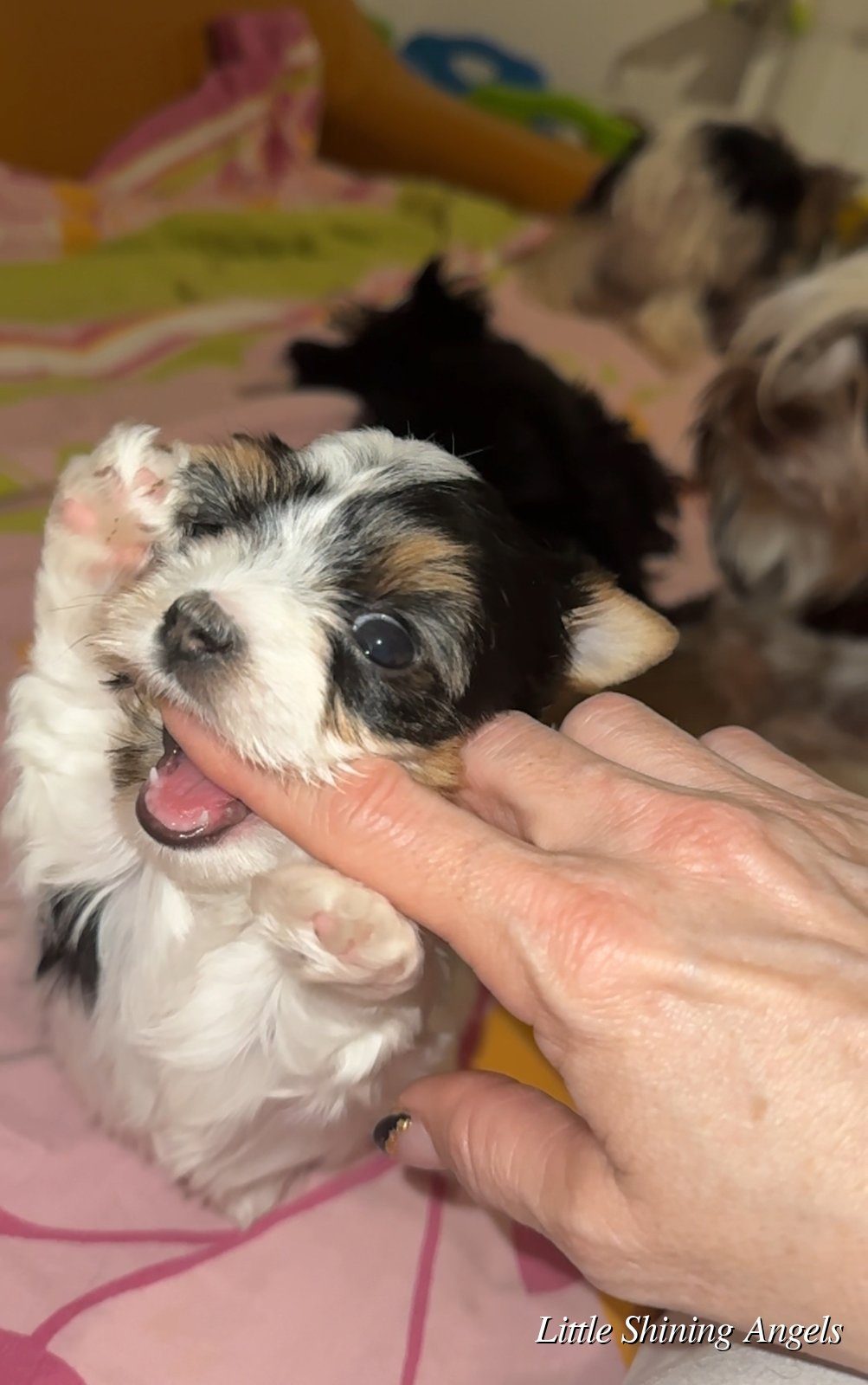
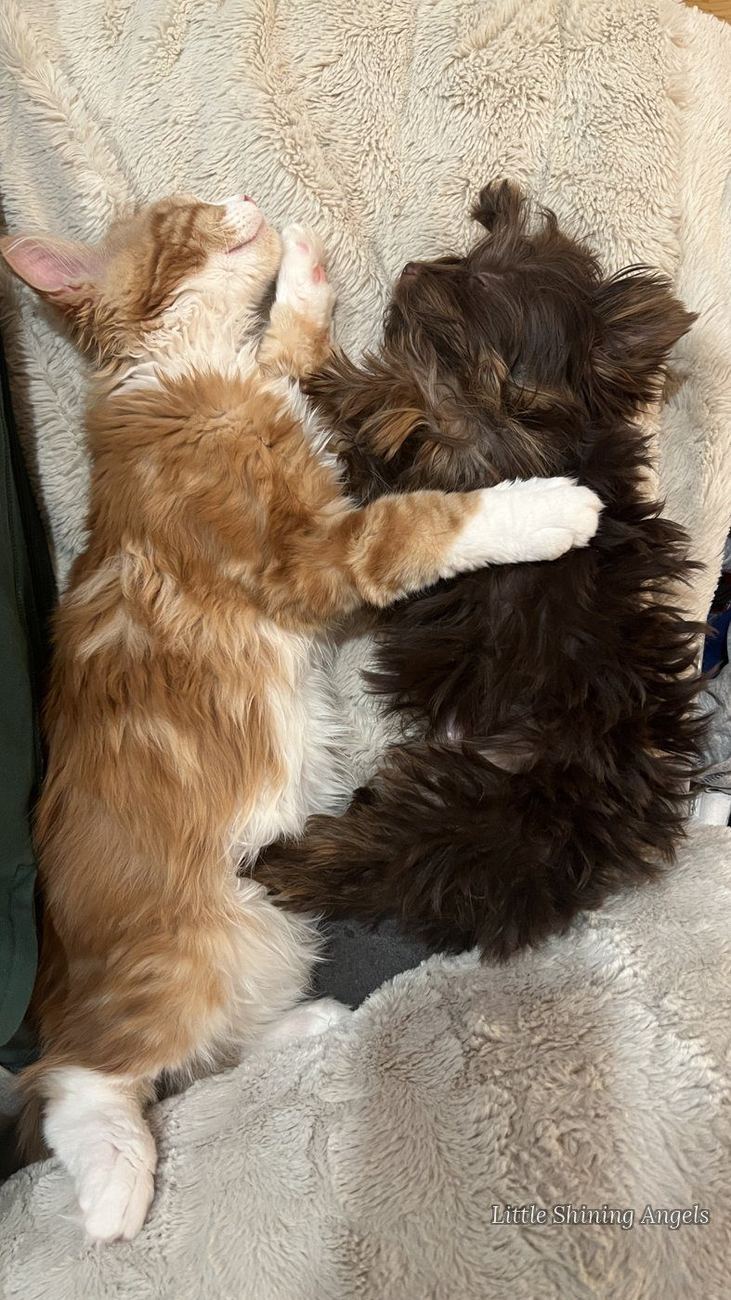
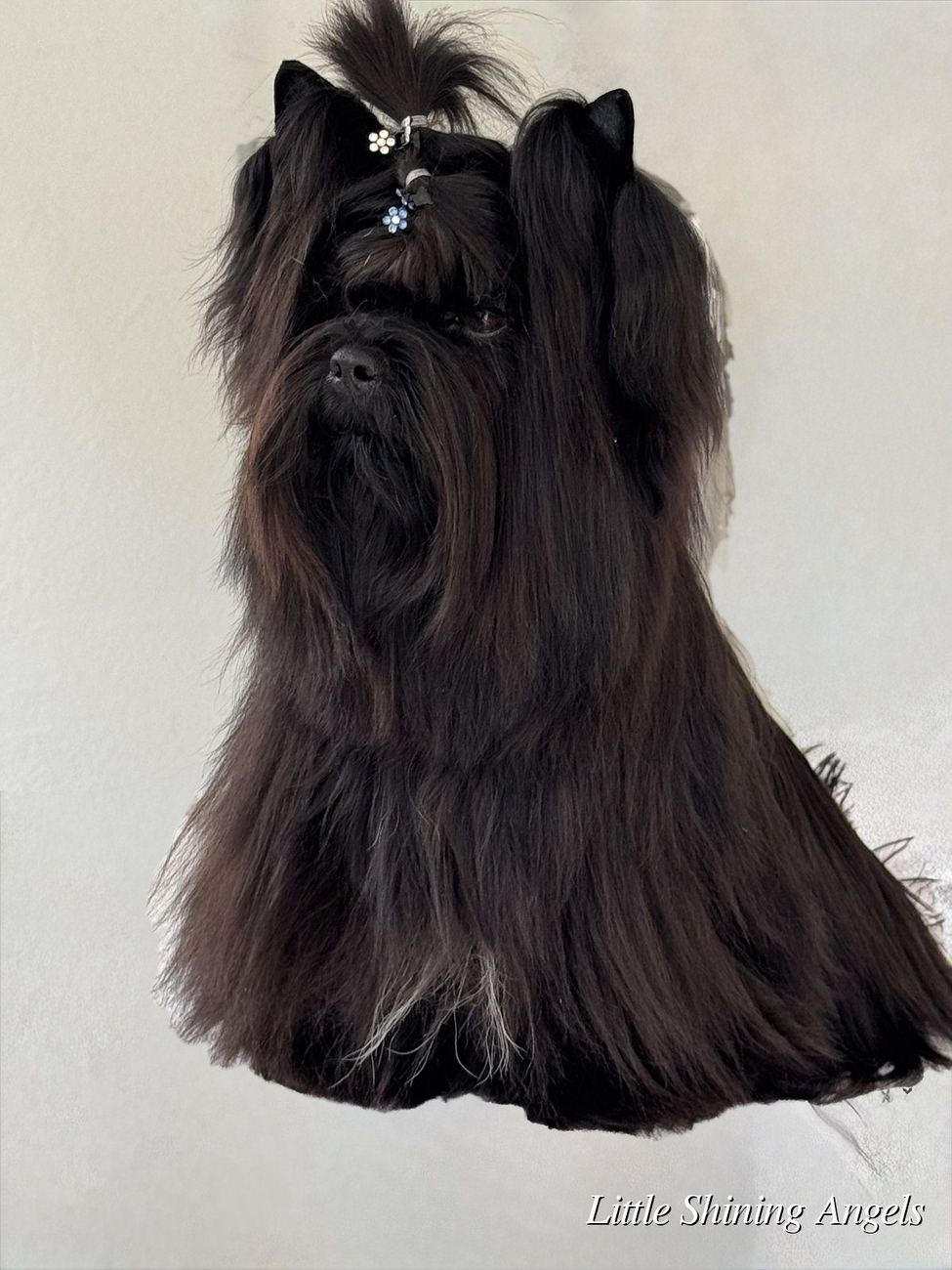
In my kennel, Little Shining Angels, I place every puppy thoughtfully, whether it is a chocolate Terrier (chocolate yorkie), a black Terrier (black yorkie) or a Biewer Terrier. I ask questions, explain and sometimes advise against it, not to make things difficult, but because I know a dog's responsible life begins precisely with choosing the right home. For me, a dog is not a product but a family member.
Literature and sources
Weiss E, Gramann S, Spain CV, Slater M (2015). Goodbye to a good friend: an exploration of the re-homing of cats and dogs in the U.S. Open Journal of Animal Sciences 5:435–456.
Salman MD, Hutchison J, Ruch-Gallie R et al. (2000). Behavioral reasons for relinquishment of dogs and cats to 12 shelters. Journal of Applied Animal Welfare Science 3(2):93–106.
Animal Protection Act (ZZZiv), Official Gazette of the Republic of Slovenia.