Few topics in dog nutrition cause as much fear as bones. Almost everyone has heard the warning that a chicken bone can lodge in the digestive tract. This warning is justified, but only for a certain kind of bone. And therein lies the difference most people do not know.
Important note: this text is of a professional and informative nature and does not replace veterinary care. Every dog is an individual. At the slightest doubt, or at any sign of illness, always call your veterinarian.
A cooked and a raw bone are two different things
When we cook a bone, its structure changes. It loses moisture and flexibility and becomes dry and brittle. Such a bone does not crush when bitten but shatters into sharp, pointed fragments. It is precisely these fragments that are dangerous, because they can injure the oesophagus or intestine.
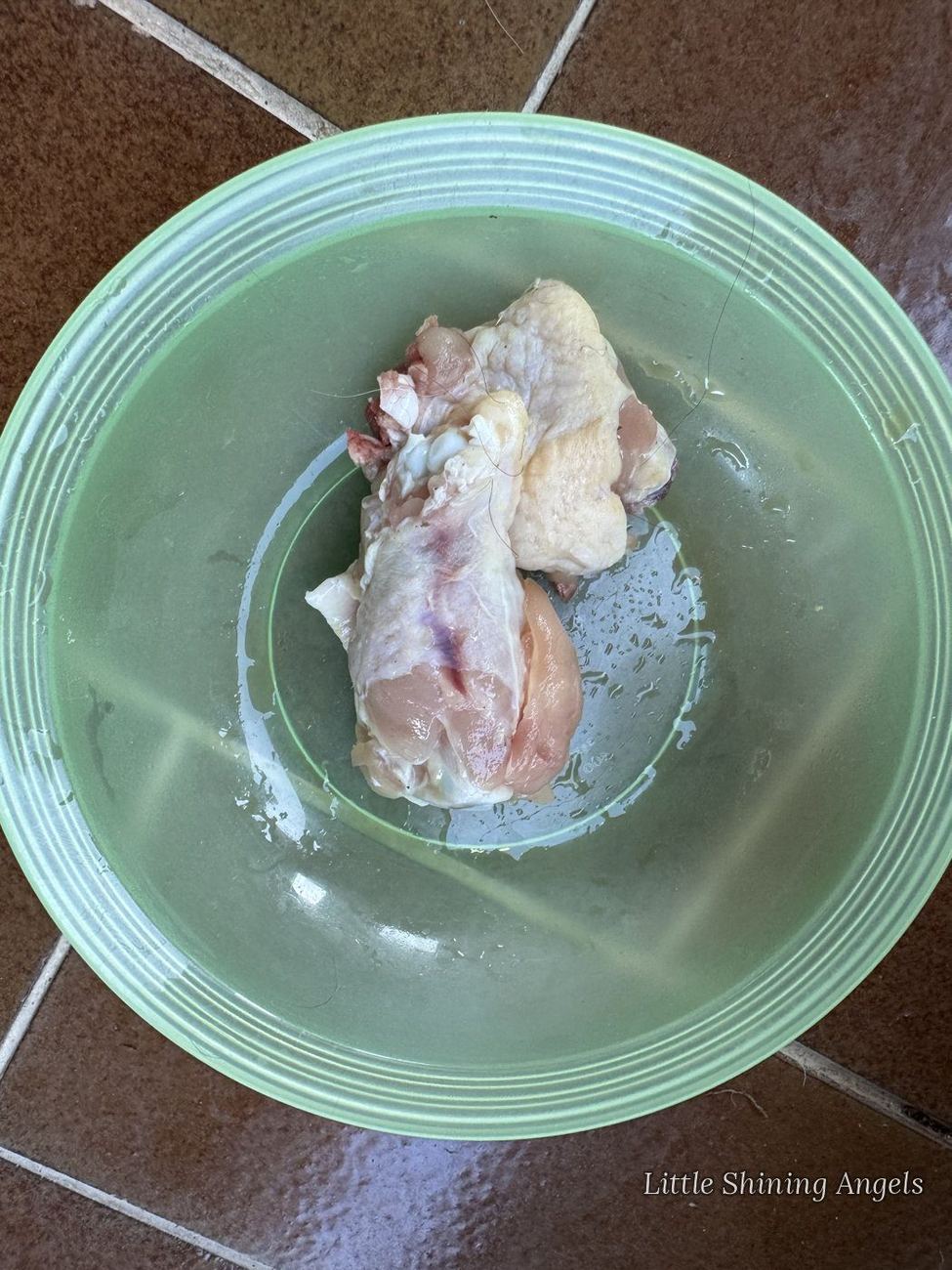
A raw bone behaves completely differently. It is softer, flexible and moist. When a dog gnaws it, it does not break into sharp splinters but crumbles and mashes. That is why raw bones are considered safe in many kennels and for dogs on a raw diet, while cooked bones are never given.
Why gnawing benefits a puppy
Gnawing a raw meaty bone is not just food. It is also work for body and mind. With our puppies — chocolate Terriers, black Terriers and Biewer Terriers — we observe several benefits.
Cleaning the teeth. During gnawing, the teeth are mechanically rubbed against meat and bone. This acts as a natural brush and helps remove plaque before it hardens into tartar. For small breeds, which are more prone to tartar, this is especially valuable.
Help with teething. Between about the fourth and seventh month, a puppy's milk teeth fall out and permanent ones grow in. During this time the milk teeth are loose and the gums itch. Gnawing helps the puppy naturally lose the loose teeth, which eases the correct growth of the permanent teeth. At the same time it brings relief, satisfying the need to bite.
Strengthening the muscles of the head and ears. This is an interesting and little-known link. During gnawing, a dog intensively uses the chewing muscles, which are connected to the muscles that hold the ear upright. In breeds where an upright ear is desired, that is, in Biewer Terriers and coloured Terriers, regular gnawing helps strengthen these muscles. It is precisely during teething that puppies' ears often temporarily droop, and gnawing is one way we help them.
In the video is our puppy, four and a half months old, gnawing a raw meaty chicken bone. You can clearly see how slowly and thoroughly she works with her teeth, rather than swallowing the bone.
How we do it
We offer puppies raw chicken meat on the bone, large enough that they must work at it rather than swallow it. The meat is always raw and never cooked. The bone must be of a suitable size for the dog, as too small a piece can be swallowed whole.
We are always present during gnawing. We never leave a dog alone with a bone. This is a rule we follow without exception.
Feeding raw meat and bones has its advocates and its opponents, and the veterinary profession is not entirely united on it. Complications can arise even with raw bones, so supervision during gnawing is essential. If you are considering this way of feeding, first consult your veterinarian and start gradually. What works for our dogs does not automatically mean it is suitable for every dog.
What to remember
Fear of bones is justified when we speak of cooked bones. A raw bone is something else, because it is flexible and does not break into sharp fragments. Gnawing raw meat on the bone helps a puppy with its teeth, with teething and with strengthening the muscles that hold the ear upright.
But through all of this the same guiding principle applies as in our breeding. Supervision, thoughtfulness and a healthy measure. We never blindly follow fashion, but observe what is truly good for each individual dog.
References and sources
Freeman LM, Chandler ML, Hamper BA, Weeth LP (2013). Current knowledge about the risks and benefits of raw meat-based diets for dogs and cats. JAVMA 243(11):1549–1558.
van Bree FPJ et al. (2018). Zoonotic bacteria and parasites found in raw meat-based diets for cats and dogs. Veterinary Record 182(2):50.
FEDIAF (2021). Nutritional Guidelines for Complete and Complementary Pet Food for Cats and Dogs.
Merck/MSD Veterinary Manual: Nutrition in Small Animals — Feeding Growing Dogs.